Getting right to it!


What a fascinating juxtaposition. The car has aged far better than those threads!

We’re more E28 than E34 guys here (although we have love for them both, obviously), but rs2racer recently shared an incredible image of an E34 M5, and we just can’t peel our eyes away!
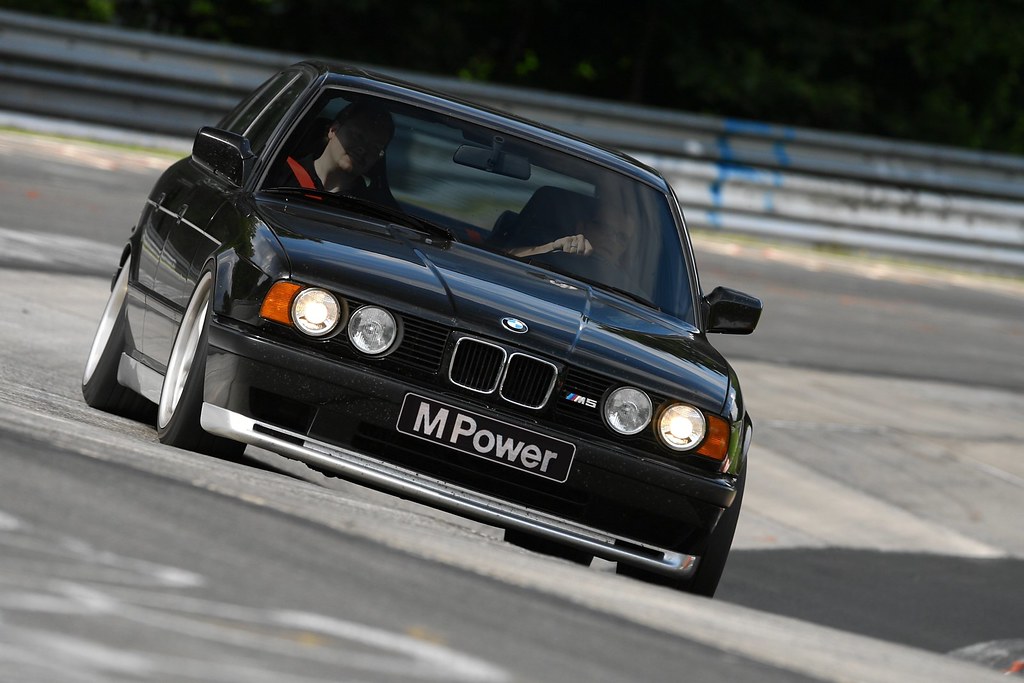
Oh, and if you’ve ever wondered what the difference was between the E28 and E34 M5, this is absolutely great:
My friend Paul Krasusky ( former e28 M5 owner ) haiku’d to me once after driving my e34 M5 spiritedly …your M is like Michael Jordan..poised, fast, but with amazing grace and fluidity….the e28 M5 is like a young Mike Tyson in his prime…raw, in your face, lethally lithe and ready for a backalley brawl anytime…ears are optional.
To wit:
Hat tip to rs2racer!

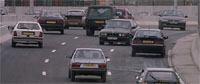
Reader Rabin shared these images of his brother’s 1987 Peugeot 505 STX tearing up VIR recently. The car looks fantastic in motion, and it’s eye-opening seeing it running alongside newer and more recognizable cars.
The car was recently modified to accept 6×139.7 bolt pattern wheels. Yes, you read that right— 6-lug wheels! According to Rabin, 6×139.7 is a natural upgrade from the Peugeot’s stock 4×140.
You can’t argue with the results.


Hunter and hunted.


This has to be an optical illusion— right?!


Thanks for sharing, Rabin!
Very cool. Bumpy as hell out there!
Jump to 4:14 to go straight to the driving bits.
About the historic banked circuit (which reminds us of Monza and Brooklands):
Autódromo de Sitges-Terramar is a former racing circuit located between Sant Pere de Ribes and Sitges near Barcelona, Catalonia. Although minor races were sporadically held on the circuit through the 1950s, it was largely abandoned after the inaugural season of 1923. Owing to the excellence of its construction, the track remains intact even after 80 years of disuse.
In 1922 Frick Amangue founded Autodromo Nacional, S.A to oversee the construction of a new concrete oval for auto and motorcycle racing. The architects were Jaume Mestres (track) and Josep Maria Martino (facilities). It was completed in 300 days at a cost of 4 million pesetas. The track had a length of 2 kilometers and banking in the corners of 60 degrees. The opening meeting was held on 28 October 1923. The event was for 2-litre GP cars and was won by Albert Divo in a Sunbeam defeating Count Louis Zborowski in a Miller, with a winning speed of 96.91 mph. No prize money was awarded. Unpaid construction overruns caused the builders to seize the gate receipts, leaving the organizers with no money to pay the drivers. As a result, the track was forbidden to host international races again. Drivers also complained about the entry and exit from the bankings claiming the transition from straight to banking and back again was poorly designed. Catalunyan Automobile Club and the Penya Rhin continued to hold races in 1925 with little success. It was sold to Edgard de Morawitz in the 1930s. The last known race held on the oval was in the 1950s. The track and surrounding land is currently an operating chicken farm. Because of the high quality of construction, the track and buildings still stand more than 80 years later and are in excellent condition (source).
The videos are a bit dry, but they’re nevertheless packed with good information and visuals. There’s a little something here for everyone we reckon. We hope this doesn’t crash the website 🙂
Enjoy!
DSLR > GoPro — you just know his footage is going to blow everyone else’s out of the water.
This gentleman knows what’s up.

Image by Adam Swank
Lord this man has some nice cars— further cementing our desire for a 510. One of these days…
Oh, and is there any end in sight to the Depth of Speed hit parade? Let’s hope not.
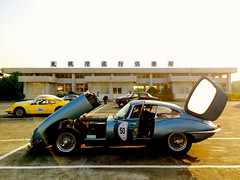
Not something you see every day! Looks fantastic.
Images are from the JCCA Historic Grand Prix at Fuji Speedway a few weeks ago.
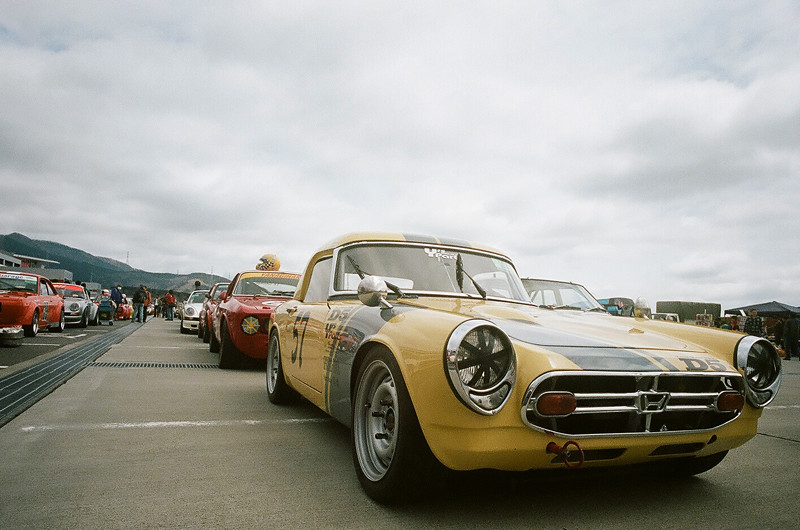

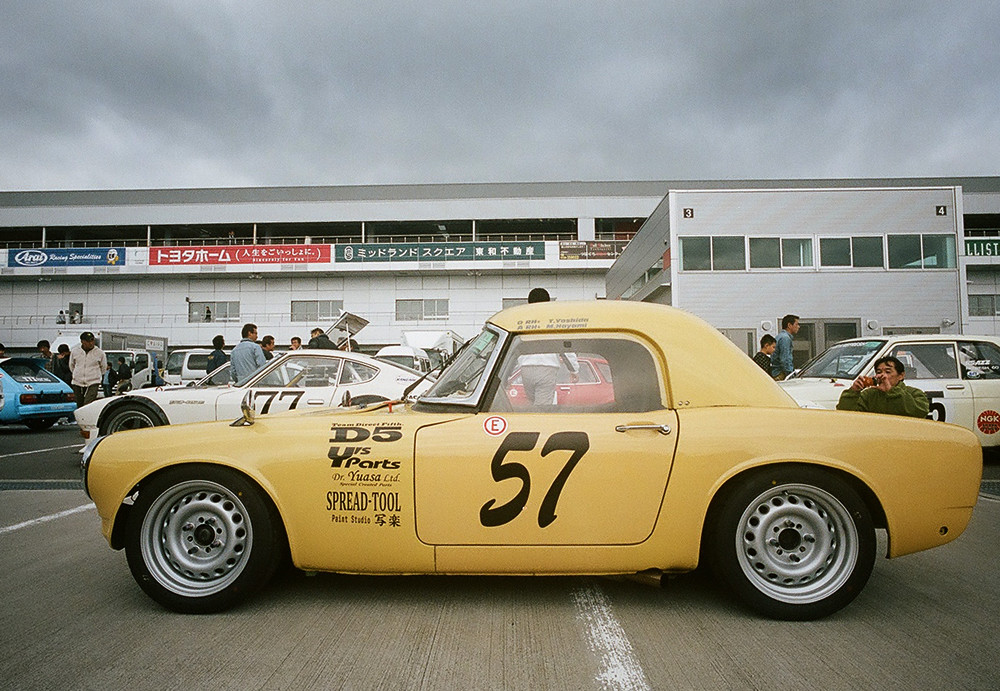
The competition:


Hat tip to Skorj!











































 Motoring Con Brio