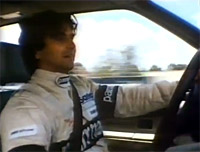
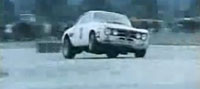
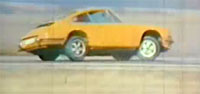
Walter Röhrl finessing a 904 GTS (and other clips)

•March 24, 2011 • Comments Off on Walter Röhrl finessing a 904 GTS (and other clips)

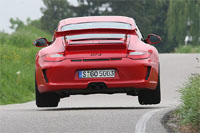
What a treat watching her dance! But as much as we love Fuchs on a classic 911, they don’t look right on a 904— give us plain gray steelies, please.

We wonder what Herr Röhrl thinks of it vis-à-vis the latest n’ greatest from Zuffenhausen 🙂

Derek Bell, for one, doesn’t appear to be too misty-eyed about the older cars:

Ooh

•March 24, 2011 • 7 Comments

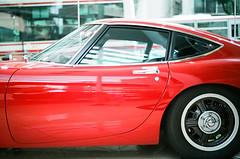
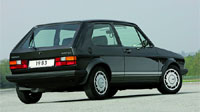
Another one from back – way back – when Toyota made interesting, desirable cars (we know, hard to imagine). We have always liked these, along with the second generation model that replaced it. Hat tip to Automobile Magazine for finding good cars on a reasonably consistent basis to feature in its Collectible Classics series.

The MR2’s legacy

The press received the [MR2] with open arms and praised its innovation, great feeling, and responsive engine. American car magazines Road & Track and Car and Driver both chose the MR2 on their lists of ten best cars which included some tough competition, such as the Ferrari Testarossa. The Australian Wheels magazine chose the 1988 MR2 as its favourite sports car. The MR2 was Motor Trend‘s Import Car of the Year for 1985. (It is worth noting that the MR2 was not eligible for the Car of the Year award, since only vehicles produced in the US were eligible until 1999. The 1985 winner, the Volkswagen GTI, was produced in Pennsylvania at the time.) The MR2 was also on Car and Driver magazine’s Ten Best list for 1986 and 1987. In 2004, Sports Car International named the MR2 number eight on the list of Top Sports Cars of the 1980s (source).

THE SPECS

ENGINES: 1.6L DOHC I-4, 112-115 hp, 97-100 lb-ft;1.6L DOHC supercharged I-4, 145 hp, 140 lb-ft
TRANSMISSIONS: 5-speed manual; 4-speed automatic
DRIVE: Rear-wheel
SUSPENSION, FRONT: Strut-type, coil springs
SUSPENSION, REAR: Strut-type, coil springs
BRAKES F/R: Vented discs/discs
WEIGHT: 2400-2600 lb

THE INFO
YEARS PRODUCED
1985-1989

NUMBER SOLD
92,000 (U.S. market, est.)

ORIGINAL PRICE
$10,999 (1985)

VALUE TODAY
$1000-$5000

WHY BUY?
The MR2’s handling put Japan on the mid-engine map. Its cool, 1980s, origami-inspired styling still looks great, and these cars have lived up to their reputation for reliability and indestructibility. Plus, Dan Gurney helped with the chassis tuning, and there are two trunks. Numerous clubs and websites are dedicated to modifying these cars, so finding a stock example-like Lee’s-can be difficult. In your favor, though, is the fact that the first-generation MR2 outsold each of the next two generations by approximately three to one.

via

More David-and-Goliath action

•March 23, 2011 • 10 Comments

Here’s an entertaining (if at times frustrating to watch) clip of a $500 24 Hours of LeMons entrant giving some P-cars a run for their money at a local track day:

What we see here:

  1. a terrific driver driving the wheels off his 134 hp E30 318is
  2. very obviously slower drivers of far more expensive and exotic machinery being stingy with point-bys (and perhaps nursing sore egos)

In other words, typical stuff. One would think those who have made it to the advanced run group of a DE organizer like PCA would somehow be above that, but no. Bewildering.

And here’s a bonus clip from the same event:

Thunderbolt is such an entertaining track.

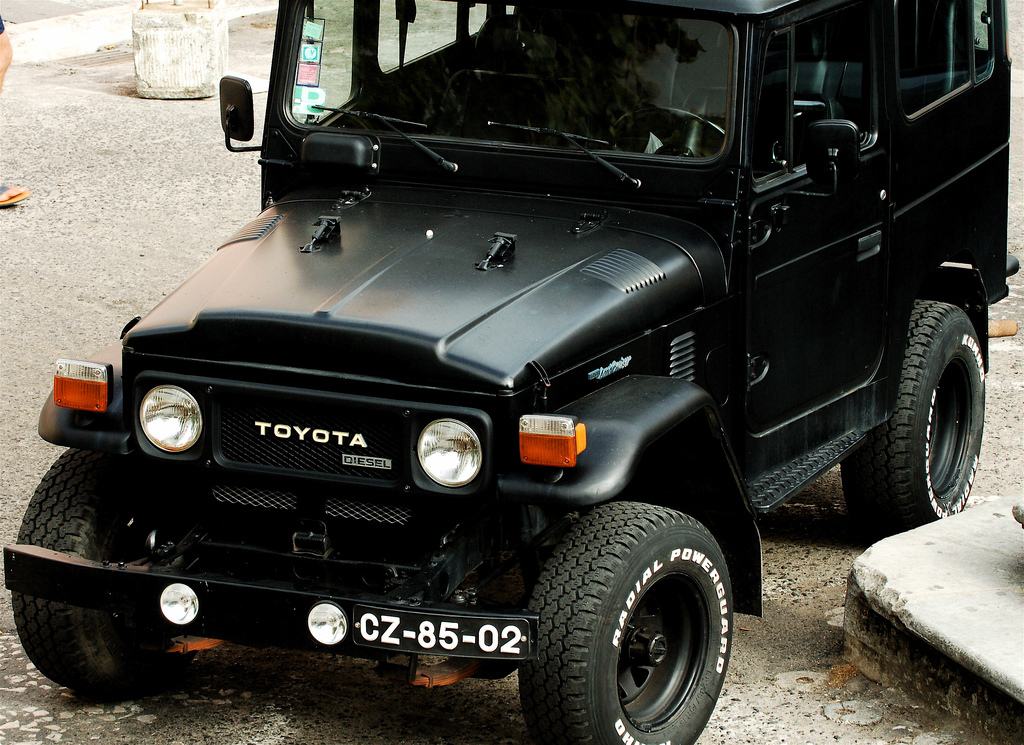
Matte black Ferrari Porsche FJ40 is sex on alloy steel wheels

•March 23, 2011 • 2 Comments

A rare truck appearance on this site (we won’t insult it by calling it an SUV). No, it doesn’t go fast, stop on a dime, or devour corners. What it will do is devour sand, and rock, and mud, and look every bit the badass while doing so. Or even while remaining perfectly motionless. Can’t remember the last time we wanted something so damn bad that wasn’t, well, a car! This thing is perfection on lifted suspension.

JG Francis on Mercedes-Benz TV

•March 22, 2011 • 1 Comment

Outstanding! You might recall we’ve had JG Francis’ Mercedes Motoring on here before. M-B themselves have now followed up with a short sun-soaked film on JG’s amazing venture.

The unlikeliest shade of mean

•March 22, 2011 • 2 Comments

Lord Vader, your car is— oh, wait.

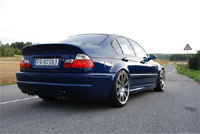
$2300 E36 325is + $5300 in mods = giant-slaying track day performer

•March 21, 2011 • 5 Comments

In stock form, the car starts out having its ass handed to it by superior Exiges and 911 Turbos (as one might expect), but later ends up reeling in those very same cars with ease. Of course, it doesn’t hurt to have a GRAND-AM professional race car driver behind the wheel, but the gains are still nothing short of impressive! With the right foundation and mods, it doesn’t take a huge investment to build a respectable track car.

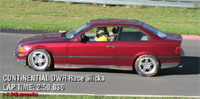
We took a $2300 1992 BMW 325is and added a series of performance parts to try and reduce the lap times. With better brakes, suspension, intake, exhaust, engine chip, 17″ wheels and racing slicks, we were able to improve the car by 25sec per lap.
All the parts were supplied and fitted by Turner Motorsport. Professional driver Michael Marsal was at the wheel, and we used Monticello Motor Club as our race track.

See eurotuner magazine for the full story or visit www.eurotuner.com

Assorted grab bag of stuff we like

•March 21, 2011 • 7 Comments

Getting right to it..

More »

Cinematic cars: Alfa Romeo 2600 Spider in “Le Mépris” (1963)

•March 20, 2011 • 2 Comments

Contempt (Le Mépris) is [Jean-Luc] Godard’s mostly faithful adaptation of an Alberto Moravia novel. The film revolves around the disintegrating relationship between screenwriter Paul Javel (Michel Piccoli) and his wife, Camille (Brigitte Bardot).

When Paul is roped into a project with the crass American film producer Jeremiah Prokosch (Jack Palance), Camille’s emotions curdle as she watches her husband prostitute himself. Prokosch has come to Europe to bastardize an adaptation of Homer’s The Odyssey, directed by the legendary Fritz Lang (playing himself). Lang wants to make slow, cerebral art. Prokosch wants a rewrite filled with topless mermaids wiggling their tails. Paul needs the money. In two key scenes, Camille wants Paul to intervene when Prokosch makes lecherous advances toward her, but Paul doesn’t. Camille is humiliated. Her frustration eventually festers into the acidic emotion of the title, and the undeniable power and beauty of the film comes from feeling her pain (source).

Believe it or not, it’s the blood red Alfa (practically leaping off of the screen) and not Brigitte Bardot who commands more presence (just) in this scene set in a dusty little village somewhere in post-war Capri. And that’s not just a testament to the Spider (which the camera lingers over, helpfully), but also to the Herculean accomplishment of dialing back the ravishing Bardot (whether through Godard’s direction, Bardot’s own performance, or some combination thereof), whose mere presence is usually enough to cause some fairly serious quickening of breath.

(And thus concludes “Alfa week”— hope you enjoyed it.)

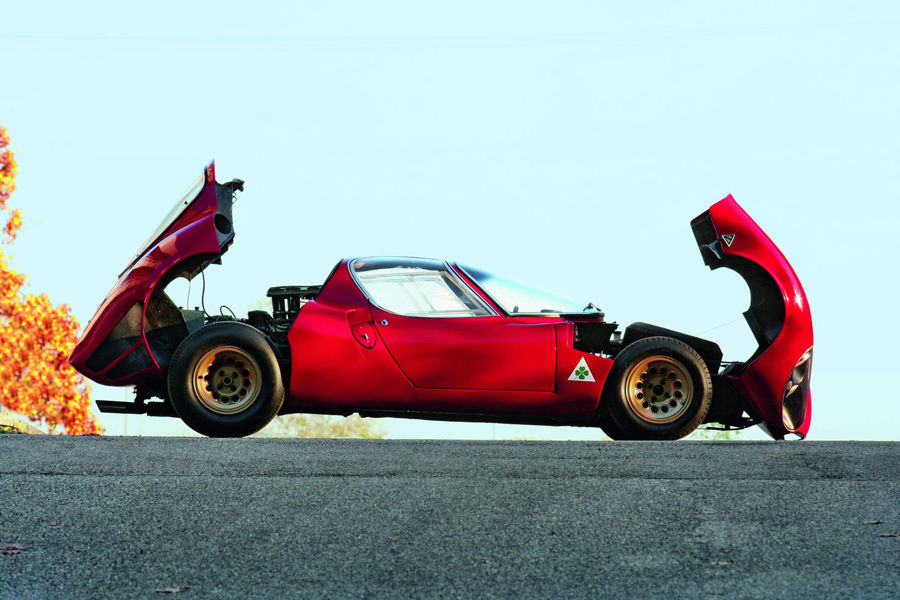
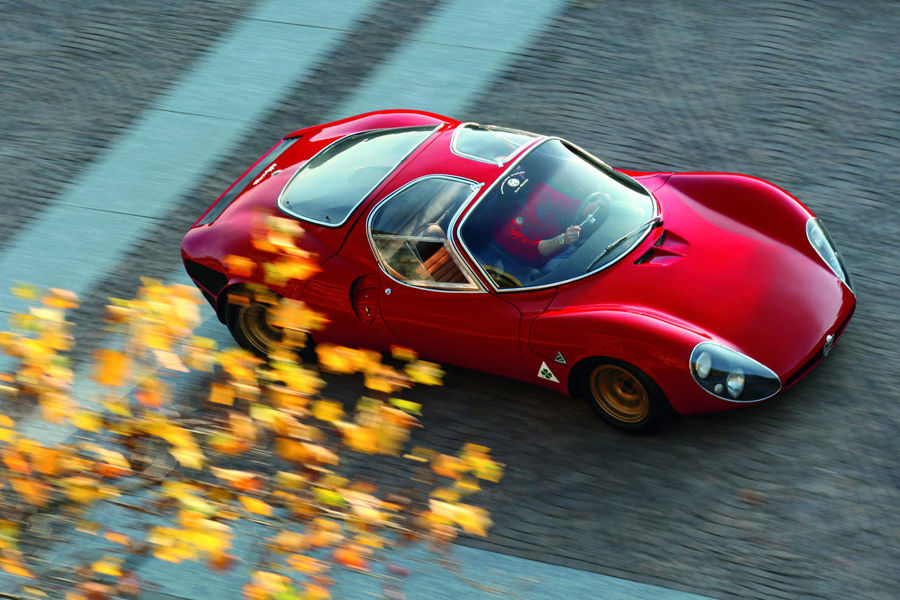
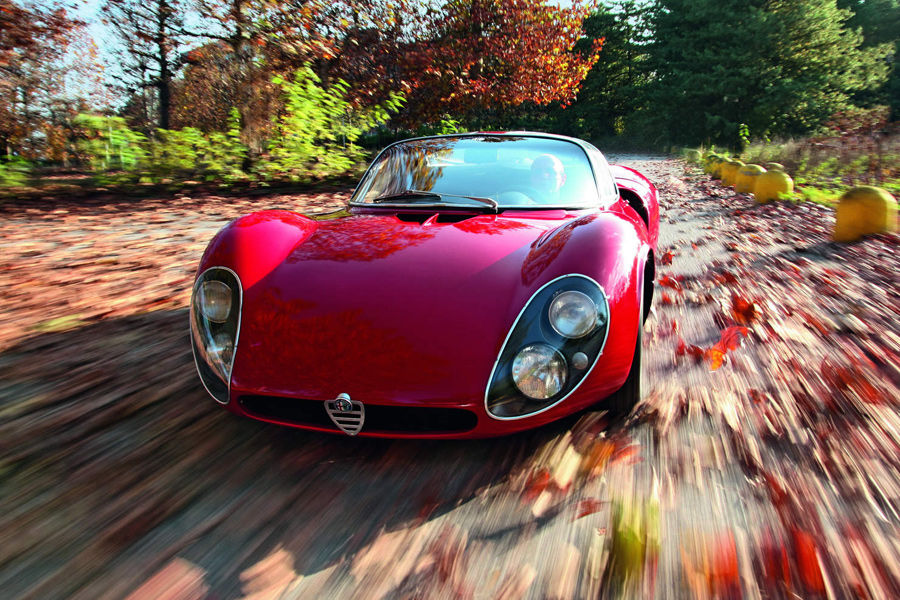
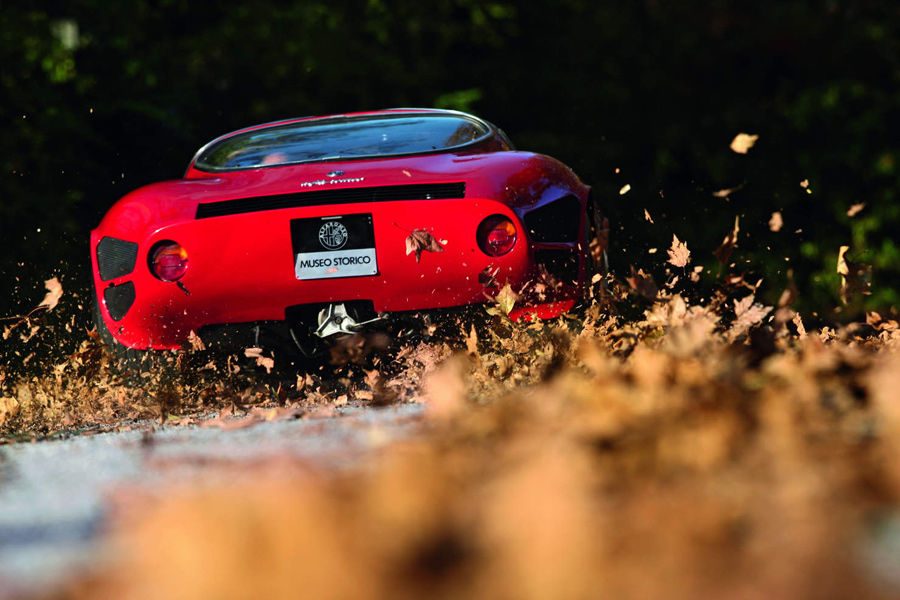
The most desirable road car ever made?

•March 18, 2011 • 6 Comments

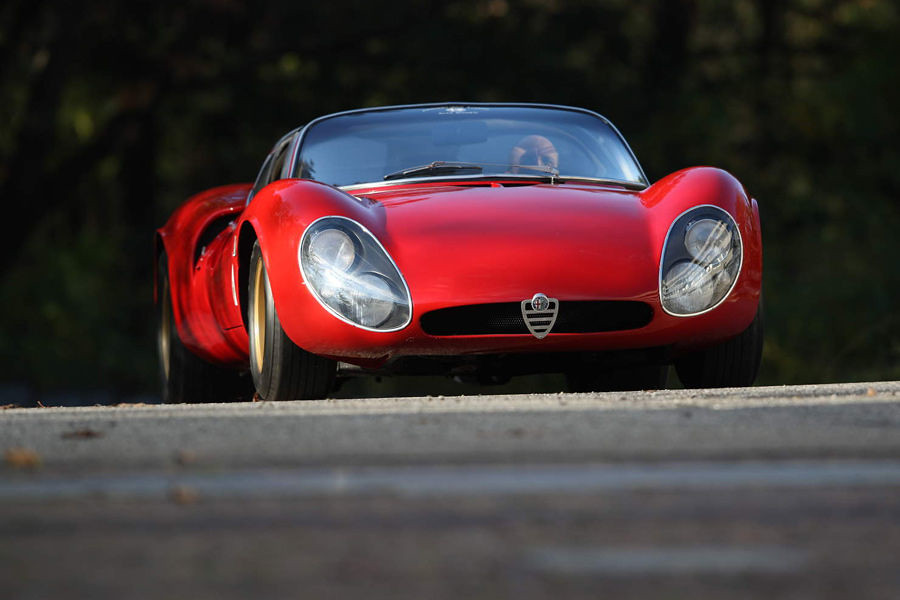
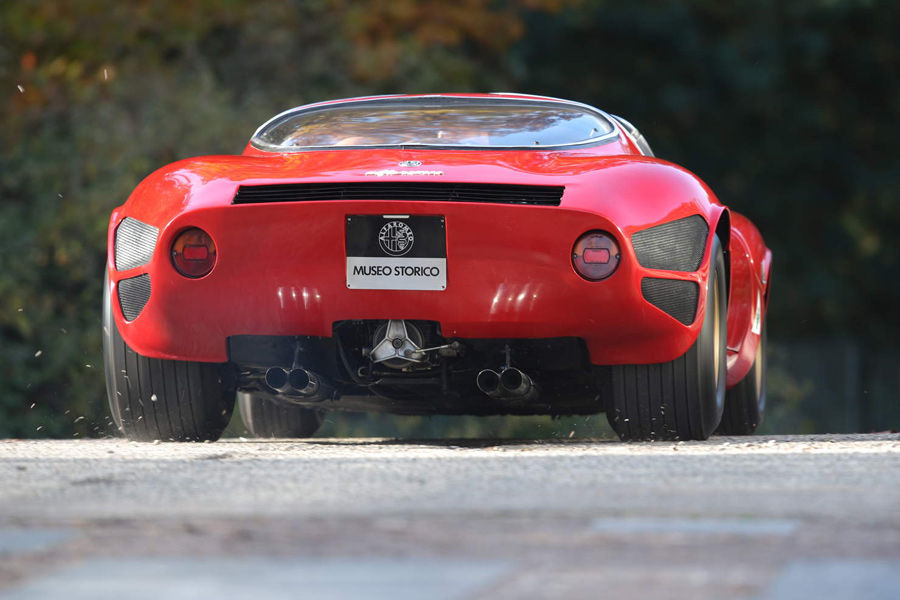
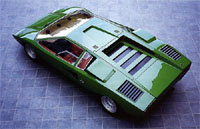
Maybe, maybe not, depending on who you ask. But certainly, with reportedly only a whopping 18 examples to have ever been made, the 33 Stradale merits serious consideration.

The Stradale, first built in 1967, was based on the Autodelta Alfa Romeo T33 racing car. The car, designed by Franco Scaglione, and built by Carrozzeria Marazzi, made its debut at the 1967 Turin Motorshow.

Built in an attempt by Alfa to make some of its racing technology available to the public, it was the most expensive automobile for sale to the public in 1968 at US$17,000 (when the average cost of a new car in 1968 was $2,822) (or ~ USD $108,110 and $17,946, respectively, when adjusted for inflation— Ed.).

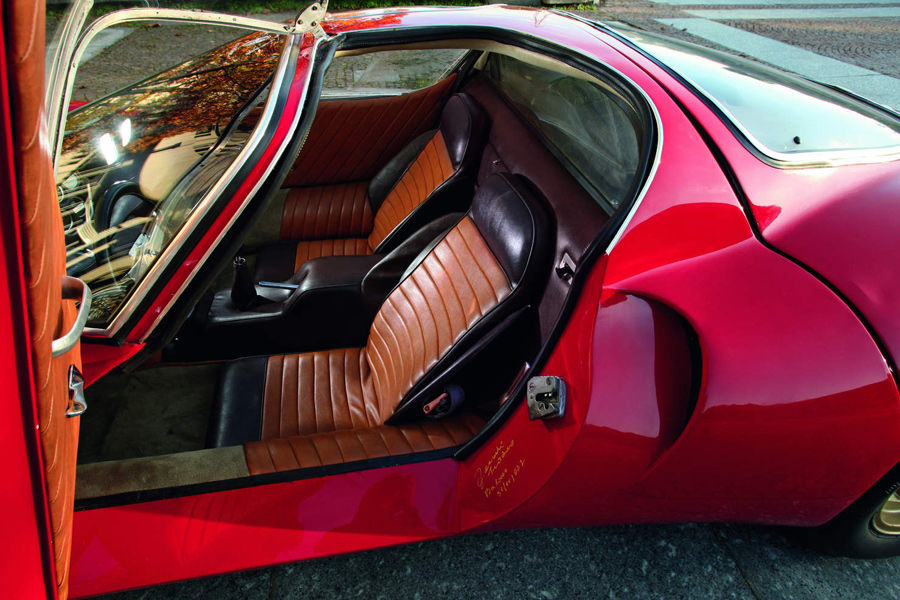
The Stradale is believed to be the first production vehicle to feature dihedral doors, also known as butterfly doors. The Stradale also features windows which seamlessly curve upward into the ‘roof’ of the vehicle.

The race-bred engine bore no relation to the mass-produced units in Alfa’s more mainstream vehicles. Race engineer Carlo Chiti designed an oversquare (78 mm bore x 52,2 mm stroke) dry-sump lubricated 1,995 cc (121.7 cu in) V8 that featured SPICA fuel injection, four ignition coils and 16 spark plugs. The engine used four chain-driven camshafts to operate the valve train and had a rev-limit of 10000 rpm. The engine produced 230 bhp (172 kW) at 8800 rpm in road trim and 270 bhp (200 kW) in race trim.

In another break from convention, Alfa used a six-speed transaxle gearbox by Valerio Colotti.

The car takes 5.5 seconds to reach 60 mph (96.56 km/h) from a standing start and has top speed of 260 km/h (160 mph) (source).

Luscious.

Also, some scale should help: compared to modern cars, the 33 Stradale is tiny.

Perhaps the more interesting question is this: what other road cars should be in the running as being among the most desirable ever produced?

(via)