Hope you all enjoyed it as much as this mom did!
Hat tip to Stipistop

But first, a little about the underlying car— the Citroën Xantia:
From an engineering perspective, the Xantia’s biggest advance was the suspension. From launch, the more expensive models were available with an enhanced version of the XM’s Hydractive, Hydractive II or H2, computer-controlled version of the hydropneumatic self-leveling suspension. This used extra suspension spheres to allow a soft ride in normal conditions, but taut body control during hard braking, acceleration or cornering. These models feature an innovation first seen on the CX and then subsequently fitted to the facelifted XM – a programmed self-steer rear axle. On sweeping curves and tight bends alike, the rear wheels turn in line with the front wheels, sharpening responses and adding to driver pleasure.
In 1994, the Activa technology was introduced, which is an extension to the Hydractive II suspension, where two additional spheres and two hydraulic cylinders are used together with computer control to eliminate body roll completely. This technology is more broadly known as active suspension, and the Xantia Activa has exceptional road holding comparable to true sports cars. In the Swedish magazine Teknikens Värld’s moose test the 1999 model of Xantia V6 Activa still holds the record speed through the manoeuvre – faster than the Porsche 996 GT2.
UK Models of the Activa came fitted with a XU10 2 litre turbocharged engine also fitted to the Citroën XM 2.0CT and Peugeot 605 SRi. It produced 150 bhp and 171 lb ft of torque and was a ‘low-blow’ type for smooth power delivery rather than outright bhp. When modified Its performance can be improved to get close to the output of V6 models for very little outlay whilst retaining the smoothness and excellent torque characteristics.
The Xantia was the last Citroën to use a common hydraulic circuit for suspension, brakes and steering like the pioneering Citroën DS (source).
And here’s said Xantia on steroids:


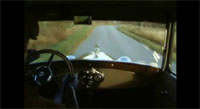
In 1993 Jean Luc Pailler and Citroën developed a Xantia turbo 4×4 to replace his successful BX turbo 4×4 which he had driven in the European and French RallyCross championships. This car had evolved through the years and will be driven by Jean Luc until at least the year 2000. He won the European championship with the Xantia in 1993 and became French champion in 1993, 1994 and 1995 and has subsequently won even more races (source).
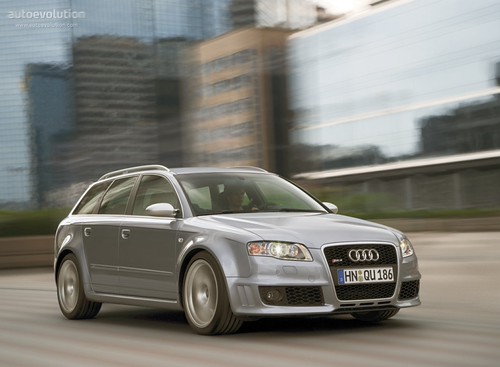
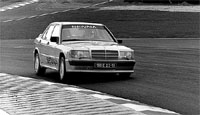
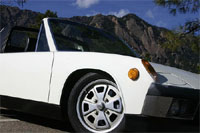
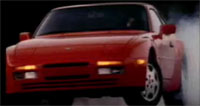
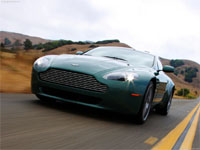
Last week, we asked you to nominate new-ish cars you’re waiting for to depreciate (the B7 Audi RS4 was our own example), and here are some of the ones you chose.
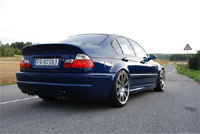
BMW M3 (E90/E92):

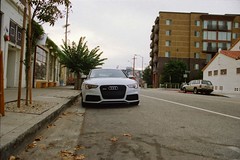
Audi A5/S5:

Audi TT-RS:

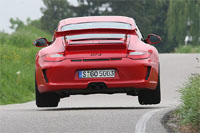
Porsche 911 GT3 (996):

Pontiac G8 GXP:

Ford Mustang Boss 302:

Porsche Cayman S:

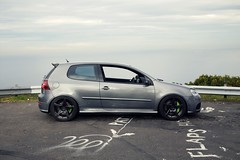
BMW 1-Series:

Cadillac CTS-V:

Subaru BRZ:

We approve this list. We wouldn’t kick any of these out of the garage, but we certainly wouldn’t mind three or four of them in particular 🙂
(Image credits: Motor Trend, Automobile Mag, manufacturer photos)
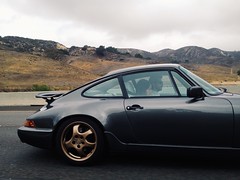
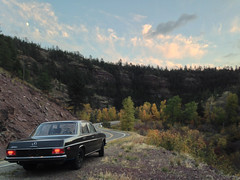
We were fortunate enough to spend this past Sunday in some pretty good company — it was a pleasure rolling with these guys 🙂
Not particularly great or creative images (reeled off in between highway and backroad blasts), but hope you enjoy them all the same.

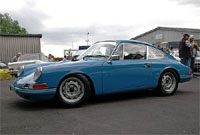
It’s Saturday morning, and my first time visiting John Benton’s shop at Benton Performance. I was dropping off my ’69 912 for him to look at a few minor things. A reputable master in 912 and vintage Porsche circles, he greeted me with his famous friendliness in spite of previously having met me all of exactly once.

He opened the shop for me and didn’t fail to impress by showing me the storage warehouse first. Nine vintage Porsches tucked away inside an unassuming business park warehouse. From a Concours-ready 356 to a rare golden lime green-colored pre-’69 short wheelbase 911, it was awesome. Seeing a hundred Porsches at a meet or show is one thing; having a dozen of them quietly sleeping in a serene warehouse just gives you a different emotional feeling.

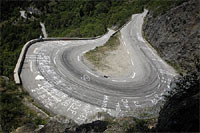
Anyone ever been? Looks like a lot of fun. Love the elevation changes in particular— always a big plus in our book.
Perhaps not worth the trip as a track destination, but if one is in the area…
Le Mas du Clos is a small French race track, located at the edge of the Pyrenees mountains, France. Originally opening in the early 1960′s, the track started life as a much shorter, 400M strip. Over the years it has been expanded, and today sits at just over 3KM. Racing does not take place as the track, the main use for the track is trackdays, for both four wheels and two…
Looking at the layout, it has a mixture of everything, some tight hairpins at the bottom end of the track, a fast downhill with several small corners in, some long sweeping corners, and even a banked corner. Because of the location it also means there is a substantial altitude difference between the top and bottom of the track, 55M…
Circuit Statistics
Length: 3.1KM (1.93 mi)
Corners: 11
Direction: Clockwise
(source)
We understand that there was some threat of closure as of a couple of years ago but are unsure what the current situation is.



We’re big fans of used cars here. Only problem is, if there is a new car that you covet now (though thankfully for us there aren’t many), it could take years – decades, even – before its value has plummeted far enough for you to snap it up. So on that note, what new-ish cars are you patiently waiting for to depreciate?
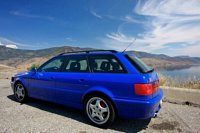
For us, one would have to be the Audi RS4 (B7) that was produced from 2006 to 2008 — a car that looks, sounds, and goes nearly as great today as when it first launched. Though plenty of cars vie for our attention (and our hypothetical dollars) all the time, the RS4 has somehow managed to hang on to a place at that ever-crowded table. We think it’d make a heck of a nice winter car someday 😀 And we love winter driving, so that’s not intended to be a backhanded compliment, either. This car on a set of Nokian Hakkapeliittas should make it fairly unstoppable in the snow or in an ice race around a frozen lake.
Our only lament (you know the one) is that we here in the US didn’t get the Avant, meaning we’ll need to settle for the sedan. Boo hoo.




Despite the fact that there’s no racing (like at Bonneville), Bolivia’s ethereal, dream-like Salar de Uyuni remains very much on our to-do list. From the looks of things, it certainly looks like it’s eligible of being one of the world’s great motoring experiences, even if one isn’t going anywhere particularly fast.
We hear it’s especially amazing after it has rained, which the photos seem to bear out (heaven and earth seem to meld into one).
Salar de Uyuni (or Salar de Tunupa) is the world’s largest salt flat at 10,582 square kilometers (4,086 sq mi). It is located in the Potosí and Oruro departments in southwest Bolivia, near the crest of the Andes, and is at an elevation of 3,656 meters (11,995 ft) above mean sea level. The Salar was formed as a result of transformations between several prehistoric lakes. It is covered by a few meters of salt crust, which has an extraordinary flatness with the average altitude variations within one meter over the entire area of the Salar. The crust serves as a source of salt and covers a pool of brine, which is exceptionally rich in lithium. It contains 50 to 70% of the world’s lithium reserves, which is in the process of being extracted. The large area, clear skies and the exceptional flatness of the surface make the Salar an ideal object for calibrating the altimeters of Earth observation satellites. The Salar serves as the major transport route across the Bolivian Altiplano and is a major breeding ground for several species of pink flamingos. Salar de Uyuni is also a climatological transitional zone, for towering tropical cumulus congestus and cumulus incus clouds that form in the eastern part of the salt flat during the summer cannot permeate beyond its drier western edges, near the Chilean border and the Atacama Desert (source).


All images via Google Image search
















































 Motoring Con Brio