
Ensuring your tyres are ready for winter – Some questions to ask yourself
•October 1, 2009 • Comments Off on Ensuring your tyres are ready for winter – Some questions to ask yourselfIf winter is coming in your town, it may be time to put those shiny motorsport tyres into hibernation – Many winter climates call for a serious overhaul of those four black rubber accessories that are so paramount the safety and performance of our car, yet which we often tend to forget about until we have a problem with them. But spend some time making sure your car and its tyres are ready for the upcoming season, and it will save you hassle and money in the long run, and keep you safe on the roads.
Here’s a list of questions to ask yourself while you’re preparing your car tyres for winter.
Have your tyres been replaced lately?
How regularly do you replace your tyres? Do you follow the manufacturer’s instructions carefully and ensure you change your tyres when you need to? If the answer to this last question is ‘no’, then now’s the time to get your act together and replace those tyres. Balding tyres can be an even greater safety risk when the roads are cold, wet and icy, so ensuring you are vigilant with replacing your tyres is hugely important if you want to stay safe on the roads.
When was the last time you checked your tyre pressure?
Just like surface tread, tyre pressure is another hugely important part of ensuring your tyres are ready for the cooler months (not to mention all-year round). Over-inflated tyres can be a hazard, especially in slippery road conditions, as they cannot grip the road as easily as tyres that have been inflated to the right pressure. Check the manufacturer’s guidelines on the inside of your tyre and inflate them to the correct pressure.
Do you need special snow tyres?
If you live in a climate that actually gets cold enough in wintertime to warrant more than just a light overcoat and a cardigan, you may want to consider purchasing special winter tyres for your car. Even if it doesn’t frequently snow where you live, colder temperatures can harden the rubber contained in standard tyres, causing them to lose their full grip on the road – even when no snow or ice is present. Snow tyres are built to withstand plummeting temperatures, and will help keep you safe on the road – both when the white stuff falls, and when it doesn’t.
What special measures do you take when prepping your tyres for winter?
Sponsored: online car insurance
•October 1, 2009 • Comments Off on Sponsored: online car insuranceBuying a classic car can be a very rewarding experience, as a classic car provides owners with a unique driving experience that cannot be compared with modern cars. Unlike modern cars which depreciate in value as soon as you drive off the forecourt, a classic car can be a wise investment as most classics appreciate in value over time. Classic car’s also benefit from having lower running cost, especially in terms of insurance and road tax. Cars manufactured before 1973 are road tax exempt and cars that are 20 years and older qualify for classic car insurance, which is much cheaper than insuring a newer car. In fact, you can verify this by getting an online car insurance quote for a classic car and comparing it to a quote you get from a newer model with the same specifications.
The only real issue faced with owning and driving a classic car is the maintenance. A perfectly kept example will provide you with years of hassle-free driving and should continue to do so if regularly serviced, whereas a classic car that hasn’t been looked after can be an absolute nightmare, affording their owners less than 100 miles of road time for truly horrific service costs. This is why it is important that you thoroughly check cars before you buy and it is good practice to avoid cars that have a questionable and unverifiable service history. This will save you from any nasty surprises, which for these classic cars can be very expensive as parts often have to be custom made because they are no longer produced and any stock would be limited and hard to locate.
If you own or are contemplating purchase of a classic car that you intend to drive frequently it would be best to invest in a car breakdown cover policy as it gives you the assurance that your investment is not going to be left at the side of the road, whilst you attempt to have it repaired.
Sponsored content: Australia’s most popular hatchbacks
•October 1, 2009 • Comments Off on Sponsored content: Australia’s most popular hatchbacksAustralians have long been partial to muscular, masculine vehicles that are built for traversing its rugged expanses. Yet a change has been taking hold in recent years. For the first time in fifteen years, muscular, brawny cars like the Holden Commodore have been pushed aside by Australian consumers in favour of sporty, petite and economical hatchbacks. These are better suited to Melbourne’s stylish suburbs than the wild expanse of the outback. Of the glut of smaller city cars that have popped up on the market, two are major standouts.
The car that may be responsible for this new trend is the Mazda 3. This sleek yet powerful hatchback may be small, but it packs a mean punch in its powerful engine and aggressive front grille. It’s got style to spare along with an attitude that gives it the air of a cocky teenager. Drivers can choose from a wide range of options when it comes to engine power. There’s an energy-efficient diesel engine to save money at the pump, along with a 2.0 DISI petrol engine that’s a joy to drive. For more information about these engine options you can check out a Mazda 3 review and compare features. The car is remarkably lightweight and easy to manoeuvre on city streets and wide open motorways alike.
Although the Commodore has slipped in popularity, Holden’s stepped up their game to retain hold of the Australian motoring market. If you wish to compare cars to buy, you will see a powerful contender in the hatchback market is the Holden Cruze. This is not your mother’s hatchback. Although it isn’t as aggressive in appearance as the slick little Mazda 3, it is still a city car with a bit of edge to it. The Cruze has been designed as a crowd-pleaser, and you can tell that Holden is making a bid to win back the crowds that may have strayed to other brands over the past few years.
Economy is a strong factor in this. There are different engines to choose from, including a turbo diesel and 1.4 Turbo induction petrol option. This intelligent Turbo option is a hit with those looking to pinch their pennies at the pump. It’s possible to travel 1000 km on a single tank of petrol, which is not only economical but also handy for travelling long distances.
At the moment, the Mazda 3 is the clear winner of this popularity contest, although the Cruze is gaining speed quickly. Because it’s an Australian brand, Holden will always be beloved on its home turf. Both have sold well over the past year in particular, and with new features and amenities to be added in the future it’s a given that this trend will continue.
However, Australians may not yet be ready to give up their love of big, butch cars. The Toyota Hilux outsold both the Mazda 3 and Holden Cruze last month, proving that there will always be a soft spot in the Australian heart for a macho vehicle.
Sponsored content: Top 10: Crazy Concept Cars
•October 1, 2009 • Comments Off on Sponsored content: Top 10: Crazy Concept CarsThe futuristic world of concept cars has seen many wild designs, and although most remain forever a concept, it doesn’t stop us dreaming about owning one. Here Passsmart takes a look at some of the craziest car concepts out there, and work out if, and how, they could ever work on our roads.
Volkswagen Floating Car
At the risk of stating the obvious, this 2012 Volkswagen designer’s dream, needs no wheels. Instead, hovering over electromagnetic road grids, this futuristic vehicle – part of the People’s Car Project – is a concept developed based upon what Chinese citizens want from future cars. So, thanks to them we could all soon be flying to work in giant bubbles.
Toyota Camatte
If you’ve ever dreamt of owning a real-life toy car, then it’s your lucky day. Toyota’s Camatte concept made its debut, not at a motor show, but, strangely, at the International Tokyo Toy Show. With interchangeable body parts, at first glance this Japanese car looks like a pricey child’s Christmas present, but it’s actually a fully-functioning road car. In keeping with the toy theme, though, this car has changeable pedals that allow kids to have their very first driving lessons. Very exciting for the kids, but terrifying for the adults.
Nissan Deltawing
This Batmobile inspired race car was deemed “too radical” for IndyCar, and instead made its debut at this years 24 Hours of Le Mans. Although it wasn’t the most powerful on the circuit, its lightweight body made up for what its engine lacked. Qualifying for the race in 29th place, it was forced to retire after 75 laps following an accident. This is one concept car which has been made a reality, but, whilst suitable for the race track, probably won’t be seen in a street near you.
Citreon Osmose
This colorful creation was born as a concept in 2001, but, like many others, was never produced. Part car, part bus, the idea behind this automobile was that, with its huge windows and spacious interior, sat somewhere between personal car and public transport. The family-friendly Osmose even had an airbag in its front bumper, incase of any accidents.
Renault Racoon
An old school concept car, first shown in 1992, the Racoon could travel over any terrain, and even water. Bearing a slight resemblance to an insect, this car had to be opened from the front and could be raised upwards to ensure adequate space off the ground. This tech-savvy motor had built in sat nav, cameras instead of mirrors, and even glass that diffuses rain! Unfortunately, unlike so many others before and after, this Renault dream never came to life.
Mercedes-Benz BIOME
The ultimate futuristic concept car, the Mercedes-Benz BIOME, would actually be GROWN in a lab. I know, we don’t really understand it either, but each car would have its own DNA to accommodate individual customer requirements, and it would run on “BioNectar4534”. This crazy creation came out of the Los Angeles Design Challenge, and there’s certainly no doubt that this designer would get straight A’s in imagination and ambition.
Fun Vii
Toyota uncovered the Vii (Vehicle Interactive Internet) this year, and it does exactly what it says on the tin. With touch screen panels along the interior, this smartphone inspired car can be personalized in any way the owner desires. A little distracting for other motorists, yes, but an absolutely ingenious idea.
Kia POP
Kia have created the future of eco-friendly transport with the compact and dynamic POP. Not only does it look good with its chrome exterior, but it can travel up to 100 miles on a single charge and produces no emissions. The perfect city car, this one hasn’t gone into production just yet, but has been dubbed the future of electric motoring.
Audi Urban
The Urban certainly wouldn’t go unnoticed traveling along the street. With its mix of race car and city car, this all-rounder is a new automotive concept in itself. Of course, it’s electric, so the eco-friendly among us need not panic, and it even has its own wireless charging facility. Audi seem to have come up with something very different, here, to their usual safe designs, and we’re liking this new look.
GM EN-V
This is – along with the BIOME – the most pioneering on the list. The GM EN-V (Electric Networked Vehicle) is a two-wheeled car which, as it happens, looks nothing like a car. Small enough to fit into any space, this one can even return to its owner when called from a smartphone application. Although our streets aren’t perhaps quite ready for the GM EN-V yet, just watch this space.
Isabelle Guarella is a blogger and fan of crazy, futuristic cars. She writes for PassSmart.com, a site that matches learners with a driving instructor in their area.
Sponsored content: Mercedes-Benz 280 SL: A Sports Tourer Ahead of Its Time
•October 1, 2009 • Comments Off on Sponsored content: Mercedes-Benz 280 SL: A Sports Tourer Ahead of Its Time
Although at first glance to the uninitiated it may have seemed to be an all-out sports car, what the beautifully crafted two-seater Mercedes-Benz 280 SL actually turned out to be was a fabulous luxury sports tourer.
Praised for its beauty and design, the Mercedes Benz 280 SL was a very forward-thinking motor vehicle, with features and safety standards such as three-point safety harnesses that were far ahead of its time. The 230/250/280 SL line was a brand new project for Mercedes-Benz; a modern, luxurious sports tourer with the size of the popular 190 model.
This car had the company’s first automatic gear shift offered on a sports model car, and while the 280 SL may not have been nearly as aggressive as the American-made muscle cars of the same period, it was still competitive when it came to speed records, tough and robust, yet still retained its high level of sophistication.
While there was a large focus on the visual qualities of the car, which has stood the test of time and is still considered to be a beauty, the 280 SL always received rave reviews and high marks for its handling, steering, and braking. Reviewers claimed the car had neutral handling with very little understeer in sharp corners, had light and accurate braking, and must have had a very low centre of gravity because the driver and occupants could never feel body roll.
Production of this car, which was deemed by many to be one of Mercedes-Benz’s best ever made, was halted in 1971, to the sadness of car enthusiasts everywhere.
Specifications, features, and stats of the 280 SL:
GENERAL:
Vehicle: front-engine, rear-wheel-drive, 2-passenger, 2-door roadster
Engine: SOHC 12-valve inline-6, iron block and aluminium head, port fuel injection
Displacement: 170 cu in, 2778cc
Power (SAE net): 162 bhp @ 5750 rpm
Torque (SAE net): 174 lb-ft @ 4500 rpm
Transmission: 4-speed automatic
DIMENSIONS:
Wheelbase: 94.5 in
Length: 168.7 in
Width: 69.3 in
Height: 51.8 in
Curb weight (est): 3200 lb
PERFORMANCE:
According to performance tests done by drivers at http://www.caranddriver.com in 2006, the car’s stats are:
0 to 60 mph: 8.6 sec
0 to 90 mph: 19.8 sec
Street start, 5-60 mph: 8.7 sec
Standing 1/4-mile: 16.8 sec @ 84 mph
Braking, 70-0 mph: 233 ft
Today, the Mercedes-Benz 280 SL is a highly valued car on the classic vehicle market due to its timeless, elegant design and solid performance. For those who are interested, dealers in the UK such as Inchcape Mercedes Benz also include classic models in their inventory, and furthermore deal with some parts for those who collect vintage motor cars. Owners of vintage models can contact Mercedes-Benz directly as they will also often have parts available for older cars. Because ownership of a Mercedes-Benz 280 SL, the price of which will be in the £100,000 range, which is considered to be quite prestigious, there are several private clubs for owners in the UK which have been around for quite a while and are very reputable. It is recommended for those who have a 280 SL to join one.
The Mercedes A Class and Social Media
•October 1, 2009 • Comments Off on The Mercedes A Class and Social MediaThe Mercedes A Class is part of what the brand calls its new generation of Mercedes-Benz models. This entry level Mercedes is meant to appeal to a younger buyer who is still seeking the amenities and performance of a Mercedes-Benz, but who is not quite ready for the cost or traditional look of an E or S Class. For those in the market for an A-Class, especially in this “new generation”, there is a place to turn for real-life word of mouth reviews. They can turn to social media.
While product reviews in the past have been conducted by traditional media such as The Sunday Times, we thought this new generation may be more likely to look to Facebook or YouTube. We decided to take a peak.
Starting with Facebook, we simply typed in “Mercedes A Class” to see what we could find. Besides being surprised at the number of females who are named “Mercedes”, we were directed to a wide variety of Mercedes A Class social media pages.
There was the “Owners Club” page with some 3,776 “likes”. This page seemed to be for Class A owners who shared their thoughts and asked questions of each other. We then found a Mercedes Benz A-Class 2013 page with over 1,600 likes from people apparently so infatuated with the car, they take random photos as they see them along the roadways. We discovered a NEXT A-Class Mercedes Benz Japan Facebook page with over 10,000 likes and some amazing anime graphics. It is apparently the official site for Mercedes-Benz Japan, and understandably, the site was written mostly in Japanese. There was the “Mercedes Classe A” Facebook page with almost 6,000 likes. This was a version for French fans of the car. We began to discover more and more pages for the Mercedes A Class, from people all over the globe.
This Mercedes is getting its share of love on Facebook. We decided to try YouTube.
The Mercedes A Class was featured in dozens and dozens of videos, some with a few hundred views, others with over a half-million views. There were YouTube videos placed there by Mercedes-Benz itself, but there were also many from independent reviewers and owners. Where comments were enabled, they came freely.
It led to the interesting conclusion that this new generation of car buyers is free to share their opinions, create fan pages and discuss their experiences with others from across the world. They are not leaving it up to advertising agencies and traditional product reviews to tell them how to feel. If Mercedes wants the A-Class to appeal to younger, entry level Mercedes owners, apparently it is working. At least if Facebook and YouTube are any indication.
David Newman – Google+ = https://plus.google.com/115351460029085604150/posts
Styling saves the day for US carmakers
•October 1, 2009 • Comments Off on Styling saves the day for US carmakersIn hard economic times when people are spending less money then your brand has to differentiate massively to continue an upward curve. Being cheap and value for money is no longer enough, if you take a look at the offers at Lifestyle Europe you’ll see how affordable motoring on a budget has become with a host of great deals available on top quality cars.
So if cheap isn’t cutting it, how can you make your car brand stand out? Go hybrid or economical? Well you could, but everyone is doing that so unless you can pull a technological gem out of your back pocket you are going to be branded in a category with a lot of other no hopers praying that frugality can see sales rise. But how do you manage to transform your brand to be more successful without defying the core values that made your company a household name in the first place?
GM, Ford and Chrysler were faced with this exact quandary in recent years as their market share began to diminish. The sales of Ford, GM and Chrysler cars were tumbling to rival brands, but an unlikely hero stood up and took on the mantel; that man was Ed Welburn, the Top Designer at GM Motors. Normally a reserved man he was disgusted with how the business was going and frustrated that their brand did not deserve to be burnt by the harsh words being written by the press and implored his team to put their hearts and souls into a design to dig them out of the mire.
It was an odd thing to do in the circumstances, but how it is been revolutionary to the company and the other Detroit-based companies’ fortunes. The fresh new designs of the Ford Fusion family car, Jeep Cherokee, the Chrysler Sedan and Kuga gave the car makers a huge lift and began to see them pulling back some market share lost to its rivals. Better still, for Ford small styling adjustments to their best-selling class-leaders such as the Mondeo and Fiesta help push the even further out in front of their rivals and boosted them further.
Something as simple as a design face-lift helped differentiate their brands and moved GM Motors, Chrysler and Ford back into contention, without which could have seen them quickly going out of business. It highlights how time can be wasted on daring new fangled ideas that quickly fizzle out and die and are not the way forward, but simply tweaking the styling to be more cutting-edge can be enough to pull a car maker out of the doldrums.
Safety systems for cars
•October 1, 2009 • Comments Off on Safety systems for carsForget about installing that little smartbox in your car to help lower your insurance claim, the technology in the driving world has moved on, and is developing systems that can help minimise and possibly prevent the occurrence of crashes.
The intelligent transport systems being developed by universities, as well as the government, are being labelled by some as a big brother approach to monitoring drivers, but by allowing vehicle-to-vehicle communication it ensures you’re much more aware of your surroundings than by human sight alone.
Take the scenario, if you will, of approaching your local cross section on your way to work, driving within the speed limit and heading towards a green light. What you might not notice is a car coming from the left of the cross section that is about to ignore a red light. With this new safety system in place a large red warning light would start flashing on your dash and a siren sound, alerting you to brake in time to avoid being blind-sided by the other driver, and potentially seriously injuring yourself and any passengers.
Although Dan Akerson – the CEO of General Motors (GM) – has recently signed a deal with AT&T to install 4G LTE capability into their cars, should owners opt for it, the implementation of the intelligent safety systems still seems a long way off, meaning that – for now – it is unlikely that the road traffic accident level in congested areas will decrease.
The only way you can ensure you aren’t involved in road traffic accidents is to drive sensibly and safely, although you still run the risk of encountering drivers that don’t share your sensibilities. Should you be involved in a crash there are things you can do to make the resulting process easier. First of all you should call 999 and alert the police of the matter, and then if possible you will need to obtain the other drivers insurance information. Taking the contact details of any eye witnesses is also useful – these will come in handy should the matter go to court.
If able to, taking pictures of the damage and noting down the make and models of the vehicles involved will help your insurance agency. If you’re experiencing any chronic pain or unusual aches and pains visit your GP and get yourself checked out informing them that you’ve recently been in a road accident. Contact your insurer as soon as possible with this information as failure to do so could result in voiding your cover.
A Look at Classic Nissan Cars
•October 1, 2009 • 1 CommentNissan has innovated and excelled in car markets in Japan, North America and throughout the world.
Recently, Nissan successfully adapted itself to a changing marketplace, and that has had a particularly stunning effect in North America. Both Nissan USA and Nissan Canada are experiencing broader success in the last few years than ever before.
In light of this recent success and renewed image, it’s more important than ever to remember where it all started. Most consumers are surprised to learn that the first Nissans, the Nissan Zaibatsu, rolled off production lines in the 1930s. In the nearly eight decades since, Nissan has manufactured a number of cars that have made a lasting impression on the industry. Let’s look at three of the most important.
Nissan S30

Image Source: Wikimedia
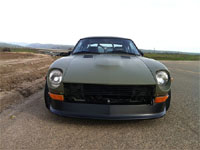
Sold in North America as the Nissan S30, the S30 also goes by the names Nissan Fairlady Z and Datsun 240Z, 260Z and 280Z. Manufactured from 1969-1978, the defining features of these models were the 4-wheel independent suspension, high-performance carburetors, front disc brakes and rear drums, and sporty styling, all at price that was significantly lower than locally manufactured like-models.
In the mid-to-late 1970s, Nissan faced some great challenges in North America due to increasingly stringent safety and emission requirements. The 280Z was its answer to that. It was available as a 2-seat coupe and a 2+2 hatchback, and it used a Bosch fuel injection system as well as a larger 2.8L engine, which helped compensate for some of the power lost due to emission requirements.
Nissan 280ZX (S130)

Image Source: Wikimedia
The Nissan 280ZX, also called the Fairlady Z and the Datsun 280ZX, was the next evolution of the 280Z, and it emerged in North American markets in 1979. It only lasted until 1983, but this model is still so popular among fans of classic Nissans that it’s not unusual to find it on display at many Nissan dealerships. For the S130, Nissan added a turbo inline-6 motor, it offered a four-seater and it further improved aerodynamics, emissions and economy.
Nissan 300ZX

Image Source: Classic Cars 2 Sale
Nissan manufactured the 300ZX in North America in two distinct generations. It manufactured generation one, the Z31, from 1984-1989, and generation two, the Z32, from 1989-2000. Sold in Japan as the Fairlady Z, the initial 1984 model influenced the North American sports car market more than any other car Nissan has ever manufactured. From the mid-80s through the 90s, the 300ZX, with its 3.0-liter turbo V6, was standard by which all other sports cars were measured.










































 Motoring Con Brio