Andy

•February 28, 2012 • 11 Comments

Andy Warhol – The BMW M1 group 4 racing version

  • six-cylinder inline engine
  • 4 valves per cylinder
  • twin overhead camshafts
  • displacement: 3500 cm³
  • power output: 470 bhp
  • top speed: 307 km/h

This work of art on wheels was employed in racing for the first and last time in the 24-hour race at Le Mans in 1979. The M1 designed by Warhol started on the grid with the number 76 and was driven by the German Manfred Winkelhock as well as Hervé Poulain and Marcel Mignot from France. They achieved a sixth place in the overall rating and second place in their class (source).

Image credits: konkyphotography.com, BMW AG

We wish we could be doing more of this

•February 27, 2012 • 4 Comments

Alas, we don’t live in the Great White North like these guys! Hat tip to reader Robert for sending in this shot of him and a friend having fun on a frozen lake somewhere in Alberta, Canada.

Assorted grab bag of stuff we like

•February 27, 2012 • 8 Comments

Getting right to it.

More »

Guest contributor: Ryan Lee on his 1972 BMW Bavaria

•February 24, 2012 • 12 Comments

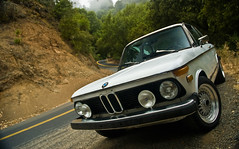
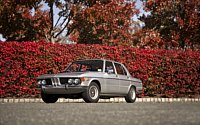
The BMW Bavaria is, in the words of its Wikipedia entry, “generally considered the forebear of the modern BMW high-performance sedan as it combined excellent acceleration, good fuel economy, plenty of room for four people and a large trunk. The majority of them were sold with a four-speed manual transmission, reflecting the sporting nature of the sedan. With a fully independent suspension along with four wheel disc brakes, the E3 was well ahead of its time in the early 1970s” (source).

Put another way, if you like the classic CS (E9) coupe but want the practicality of a sedan, then this would be the car to get. We invited Bavaria owner Ryan Lee to talk about his.

MCB: Why the Bavaria?

RL: I had been wanting to get something to replace my 2003 BMW 330xi (E46). I’m not that mechanically challenged, but I always saw myself getting into something brand new. I hadn’t even heard of the Bavaria until a VW friend showed me the classified listing on VWVortex, but much to my surprise it was love at first sight. I told my friend I was getting it, and a few weeks later I was driving it 800 miles home from Georgia.

More »

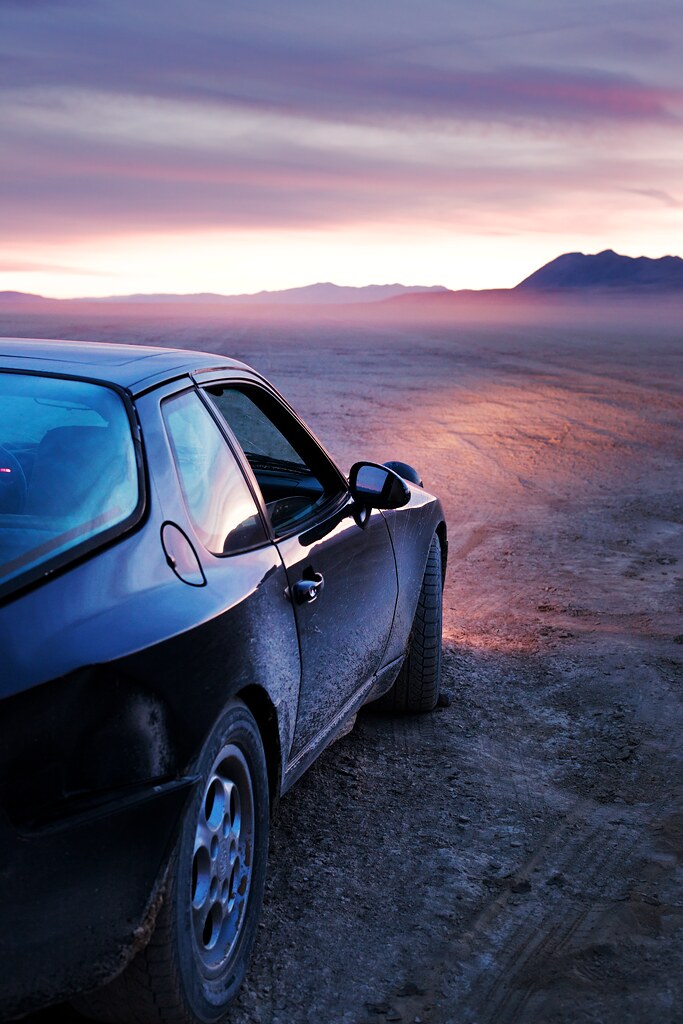
968, Black Rock Desert

•February 23, 2012 • 3 Comments

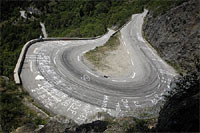
The Black Rock Desert is an arid region in the northern Nevada section of the Great Basin with a lakebed that is a dry remnant of Pleistocene Lake Lahontan. The region is notable for its paleogeologic features, as an area of 19th-century Emigrant Trails to California, as a venue for rocketry, and as an alternative to the Bonneville Salt Flats in northwestern Utah, for setting land speed records (Mach 1.02 in 1997). It is also the location for the annual Burning Man festival (source).

Image via

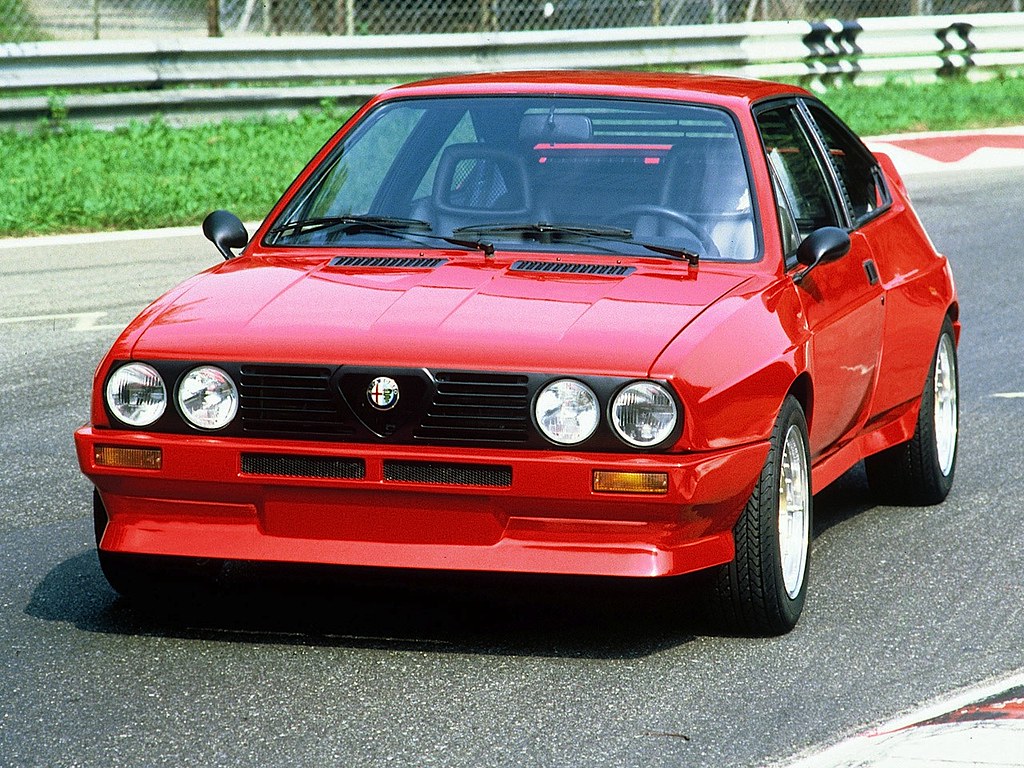
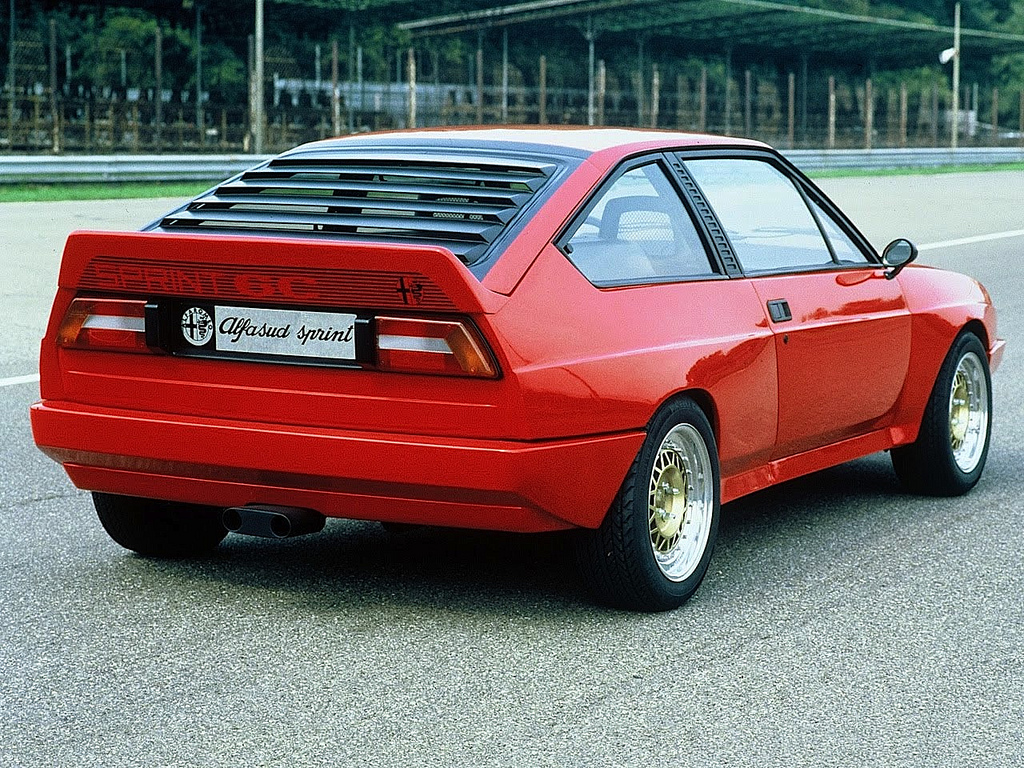
The car that never was: the Alfa Romeo Alfasud Sprint 6C

•February 22, 2012 • 8 Comments

We are digging everything about this car! Shame it was never produced.

Very little information about it online, but what we do know is that it was a one-off prototype built by in-house Alfa tuner Autodelta, and that it seems to make an appearance periodically at the annual Rétromobile exhibition in Paris.

From autosital.com (loosely translated from French— thank you, Google Translate):

In 1982 Alfa Romeo begins to develop a car to compete in the World Rally Championship in Group B.

“It’s an Alfasud Sprint 6C,” Walter says Alexis Alfa Romeo Club of France. Some experts say no, but officially there was a single copy.
Its origin was a willingness to participate in the World Rally Championship category in group B. So this car is in compliance with the regulation of group B. It is equipped with a V6 rear center position. This is the complete mechanical GTV6 was chosen. This is a car that was produced in a single and has never been developed for the competition since then the championship Group B stopped.

It was considered too dangerous. The cars were too fast, too powerful. There have been some very serious accidents, with the dead. The federation had decided to change regulations to reduce, limit the power of the cars.

Compared to the standard version, there is little in common. Apart from the body or parts of equipment inside. All that part is different chassis and mechanics as well.

It is a V6 2.5-liter that was originally designed for the Alfa 6 and that made the heyday of GTV 6. It is a motor powered by a 60 ° injection Bosch. It is here in a longitudinal rear. The hull is steel with polyester element. It is not much lighter than the standard car because it has a much larger mechanical.

Originally the car was designed with a boxer engine, an engine that was very light. Here the weight of the V6 that the car is not much lighter than a standard car.

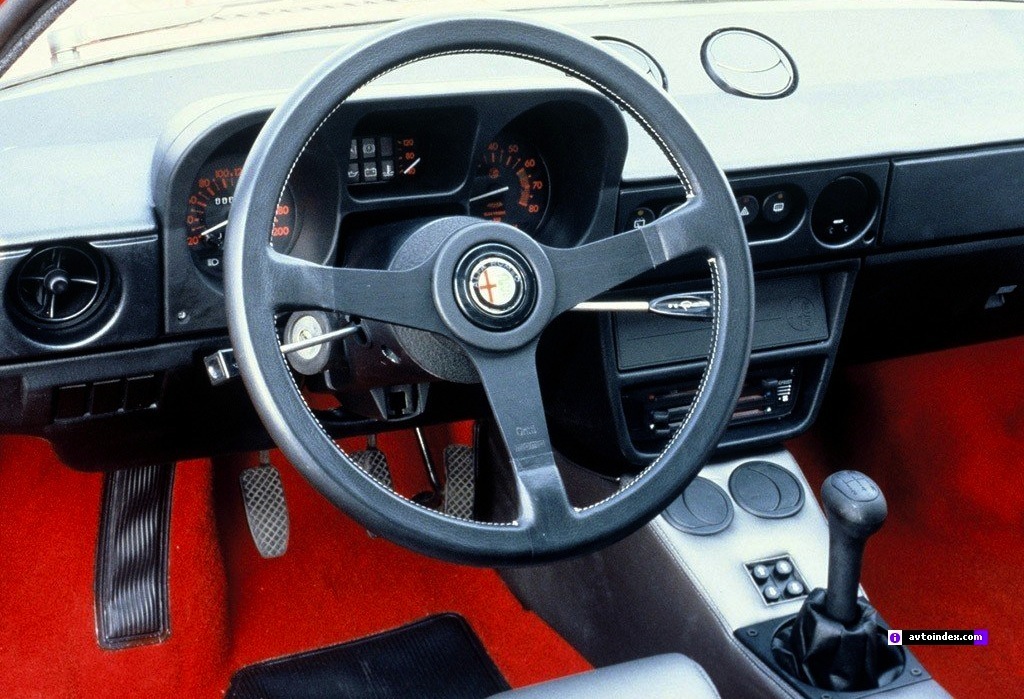
The interior is very close to the series. Apart from the steering wheel and bucket seats for the competition, the rest is completely standard.

Aesthetically it is a Sprint inflated bodybuilding. That is to say with flared fenders, wider lanes, wider wheels.”

More information and images can also be found on the Spanish site sprintmania.

The cinematic cars of “Un homme et une femme, 20 ans déjà” (1986)

•February 21, 2012 • 4 Comments

Could this be the case of a good chase (race?) scene buried in an otherwise unimpressive movie? That could very well be what we have on our hands with 1986’s “Un homme et une femme, 20 ans déjà”, which collected a whopping 5.6/10 rating on IMDb and an even more unsparing 33% on Rotten Tomatoes. If the brief clip below is any indication, though, perhaps the film may be worth sitting through. This highly choreographed, oddly dispassionate (where’s a raving Dennis Hopper when you need one?) scene plays out like an intricate dance between all your favorite 1980s saloon cars, not to mention a precursor to the much loved “Ronin”. From the Lancia Thema to the Peugeot 505 to the BMW E28 528i, they’re (almost) all here (sorry, Alfisti).

The original 1966 film was highlighted awhile back here.

Hat tip to Clement!

Assorted grab bag of stuff we like

•February 20, 2012 • 9 Comments

Getting right to it. Oh, and happy Family Day to our friends in the Great White North!

More »

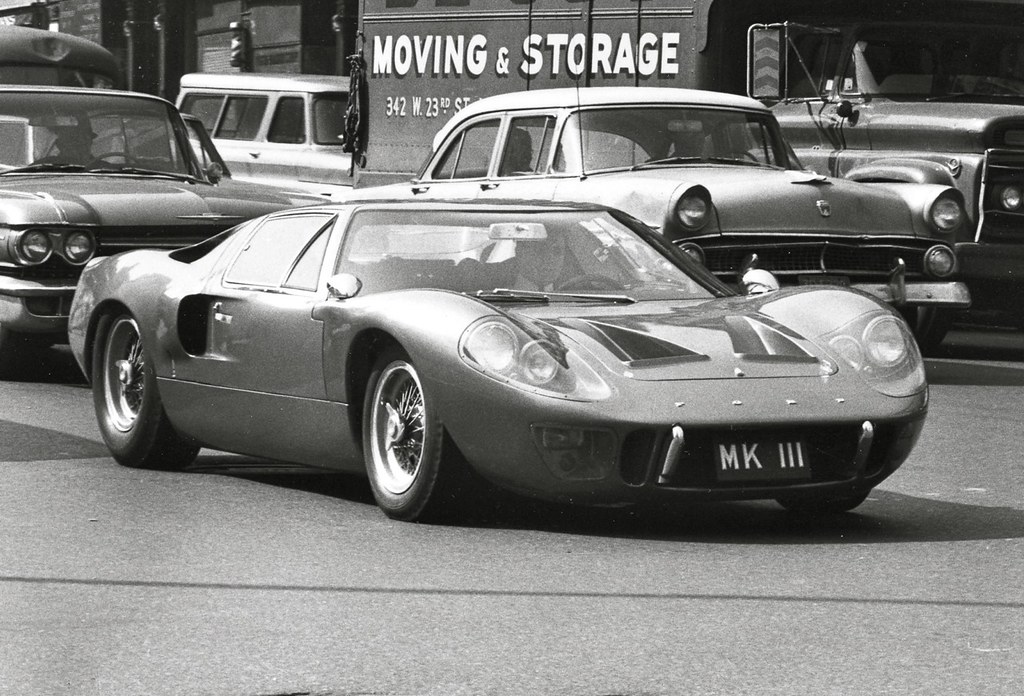
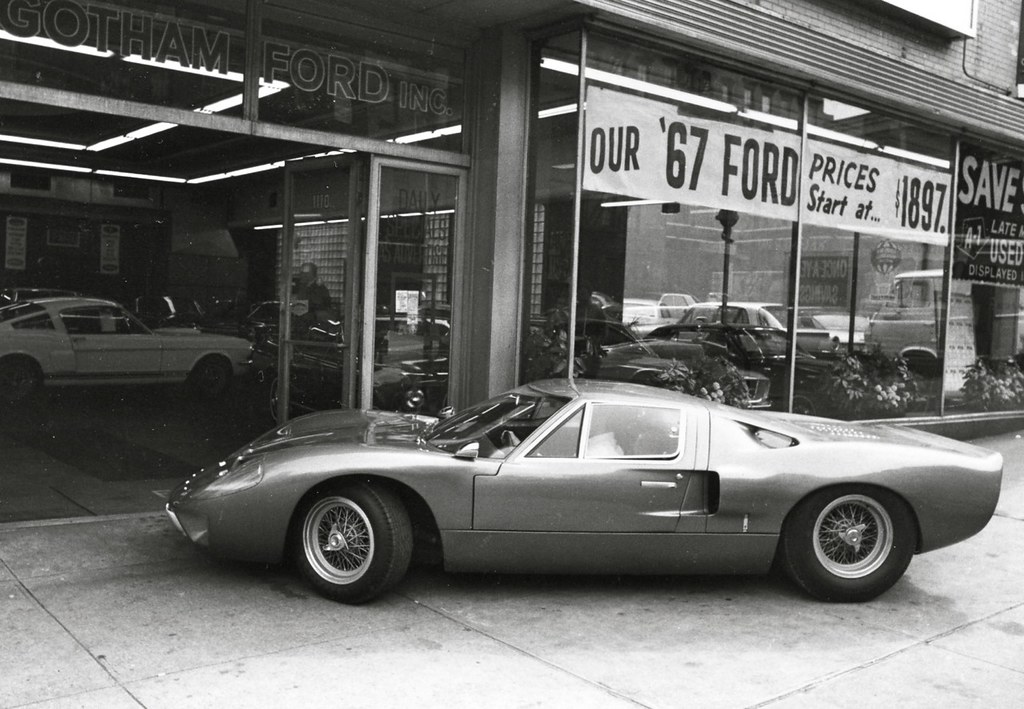
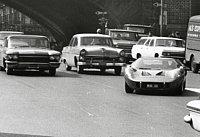
This is what the roads looked like back in 1967

•February 17, 2012 • 9 Comments

Throw a sports car street-legal race car like the MkIII GT40 into the mix, and it looks like the car may as well have come from another planet. We post a lot of images of older cars on this site, but viewed in isolation and through the lens that is present day, they are essentially seen in a vacuum. To view a car like the GT40 within the context of that time – and on the street, not the track – is pretty amazing and eye-opening.
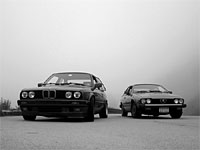
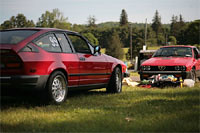

First Ave, New York


First Ave and E 60th St, New York


E 60s off FDR Drive


Gotham Ford at First Ave and 61st St. Note the Shelby GT350 in the background

via Car Guy Chronicles (very nice article to go along with the above images, by the way)

Your moment of zen
•February 16, 2012 • 3 Comments

No words necessary— not when you have a swarm of angry Procar M1s to do the talking.
About the series:

The BMW M1 Procar Championship, sometimes known simply as Procar, was a one-make auto racing series created by Jochen Neerpasch, head of BMW Motorsport GmbH, the racing division of automobile manufacturer BMW. The series pitted professional drivers from the Formula One World Championship, World Sportscar Championship, European Touring Car Championship, and other international series against one another using identically modified BMW M1 sports cars.

Billed as an opportunity to see a mix of drivers from various motorsport disciplines, the championship served as support races for various European rounds of the 1979 Formula One season, with Formula One drivers earning automatic entry into the Procar event based on their performance in their Formula One cars. Austrian Niki Lauda won the inaugural championship. In 1980, the series held some events outside of Formula One schedule, and was won by Brazilian Nelson Piquet. BMW chose not to continue the championship in 1981 to concentrate on their entrance into Formula One (source).