When Do I Need New Tyres?

•February 1, 2018 • Comments Off on When Do I Need New Tyres?

You’ve probably heard many stories about tyres, over inflated improves fuel efficiency or under inflated can increase grip. But, the simple fact is your tyres should always be at the right pressure, the one that your manufacturer recommends.

Over inflated tyres are actually very dangerous. But getting the pressure right is only the first step; there are actually a whole range of regular checks you should complete on your tyres.  As soon as your tyre starts to fail these tests and you can’t correct it you need to locate new tyres Melbourne has a host of tyre specialist centres, as does any part of the country!

It is advisable to use a comparison service to ensure you are getting your new tyres for the right price.

So How Do You Know If Your Tyres Need Replacing?

Your tyre is the only part of your vehicle in contact with the road, it provides grip which ensures you can accelerate smoothly, corner safely and even brake efficiently!

It works well in the dry, but the grip really stands out in wet weather, the treads are designed to push water away from the types, improving grip.

Your tyres need replacing if any of the following apply:

  • Low Tread

The minimum tread depth in Australia is 1.6mm but you should replace your tyres as soon as they go below 2mm, performance will already be reduced.

You simply need to purchase a tread depth checker, insert it into the tread of your tyre and it will tell you how deep they are.

  • Damaged Side Wall

A visual inspection of your side walls will quickly alert you to any foreign object which has been inserted into them; accidentally or intentionally.

However, you should also look for signs of cracking. This is particularly common in climates that are dry and dusty or if the vehicle is not used often. Cracked side walls dramatically increase the chances of a blow out when driving, which can have disastrous consequences for you and your passengers.

  • Deflating Regularly

If you notice that your tyre needs to be inflated on a regular basis and it is losing quite a bit of pressure then you probably have a slow puncture.

Your tyre may need replacing but it is also possible that it can be repaired. You’ll need to visit your local tyre centre to get professional advice.

It is important to note that driving on a deflated tyre will damage the inner wall and make it impossible to repair.

  • The Feel

A well balanced car should feel smooth and drive in a straight line, even if you let go of the steering wheel. If you’re finding that your vehicle is vibrating heavily or pulling to one side then you probably have a tracking issue.

This can cause premature wear on the inside edge of the tyre which you may not easily spot. It can also place strain on your gearbox and drive shafts.

If you experience either of these then it is best to have the vehicle checked by a professional.

What Are The Causes Of Poor Shifting In Motorcycling?

•February 1, 2018 • Comments Off on What Are The Causes Of Poor Shifting In Motorcycling?

The use of motorbikes has increased dramatically in recent years. IN fact, between 2010 and 2015 there was an increase of 22.3% in motorbike registrations! Motorbikes are attractive due to their low running costs, the ease in which they can negotiate traffic and the feeling of freedom every time you ride one.

This is why motorbike sales have increased so much and are likely to hit the million mark in the next few years.

Of course, not everything is perfect in the world of motorcycling. You still need to complete basic maintenance tasks yourself. Other issues can actually arise from the way you ride as opposed to a lack of maintenance or an issue with the engine. Shifting, or more accurately, poor shifting, is one of these. There are several common causes:

Shift Pedal

Most motorbikes will allow you to adjust the shift pedal; this is to make it as comfortable as possible when changing gear. However, if you adjust the height of the shifter too dramatically then you’re likely to find that it actually claps against the linkage. This effectively prevents you from shifting gear as the linkage is unable to move into the full release position.

The first step if you have a shifting problem is simply to examine the external shifter.

Clutch Drag

This is most noticeable when your bike is cold. The shift lever will seem very hard and the bike will not want to go into gear. In general this is because the clutch cable needs to be adjusted.

All you need to do is loosen the locking adjustment in your cable and then work the clutch lever a couple of times. Swing the handlebars to full lock in both directions before retightening the locking adjustment. You should be looking to add approximately ¼ cm to your clutch handle play.

The difference should be noticeable!

Size

You might be surprised to realize that your size does matter. If you are trying to ride a bike that is too big for you, or too small, then you’ll not be able to operate the controls effectively. Something as simple as not bringing the clutch leaver in properly will give you shifting problems.

Clutch Lever

Your clutch lever needs to be released slowly to ensure the spines on your gearbox blend together seamlessly. This will create a smooth shift without any noticeable drag or any risk of locking your back wheel.
To aid this you can blip the throttle, this helps the engine revs match the road speed which will give you a much smoother shift.
Gearbox

It is possible that your clutch is worn out, causing you to slip while changing gears. Assuming the clutch cannot be adjusted, this is one situation where you’ll need to change it.

The alternative is that too many bad shifts or just wear and tear have damaged your gearbox; it might need rebuilding or replacing.

In many cases a poor shift is directly related to the way you operate your motorcycle but it is also worth checking out all the possibilities before committing to any one solution.

Winter Is Coming (and Its Impact On Your Truck)

•January 1, 2018 • Comments Off on Winter Is Coming (and Its Impact On Your Truck)

One of the biggest threats to any vehicle is extreme weather. From sluggish startups to broken down joints, to the failure of certain points, the winter can wreak havoc on a vehicle. This is particularly true for a pickup truck, as they often do more miles and carry heavier loads. It also drives on rougher terrain.

One of the coldest snaps in US history is coming down and winters are getting colder. So, winterizing your truck has become more important for protecting your pickup. Yet, it’s often a step that many neglects or even forget about. Moreover, many people don’t take a fully comprehensive approach which can leave you with some problems throughout the winter.

So, we decided to put together a guide on 6 ways you can prepare your truck for the winter to protect it and keep it running smoothly through the cold months, including good practice and the right aftermarket truck parts to keep your ride in top shape.

6 Ways to Winterize Your Truck 2019

  1. Use alcohol and vinegar to rid the effects of ice on your screens, handles, and locks

Alcohol and vinegar are two of the simplest and best tools for fighting ice and frost. This is because the acid in these chemicals helps breakdown stubborn ice to water.

So, wiping down your handles, locks, windows, and windscreen with alcohol or vinegar can keep your car functional in winter. You can use rubbing alcohol, white wine vinegar and vodka for these. They should all do their job and prevent staining.

  1. Use covers for your screens, seats, and your exterior as a whole

With the cold comes the damp. This damp can freeze and cause damage to upholstery and the interior of your truck. The same can be said of your truck’s exterior. Frost and the cold can damage the joints and paintwork of your pickup if extreme enough.

Covering your interior and exterior can help protect your vehicle and keep it from degrading with bad weather. It can also prevent the buildup of damp. So, invest in a good seat and exterior covers to prevent frost and damp buildup on your truck.

  1. Keep a spare battery and wheel chains in the trunk

Weak batteries can be hit hard in the cold weather. This can leave you in a, particularly bad spot if you find yourself stranded with a dead battery. The same can be said if your wheels fail you on some icy roads or hills. The 4-wheel drive can only get you so far in bad driving conditions.

So, keeping some wheel chains and a spare, fully charged, a battery in your pickup is a must for those who are frequently traveling through the winter season.

  1. Swap to winter tires

Alongside wheel chains, you’ll need good winter tires on your pickup to keep your engine and axels in good condition through the winter. This is particularly true for trucks due to the heavier loads they’re usually transporting.

Good brands would include Good Year and Yokohama tires. These can keep your pickup going through tough road conditions. They’ll also spare your axles and help keep your pickup in good condition. This is especially the case if you’re trucking through multiple winters.

  1. Service your engine and 4-wheel drive before winter hits

As indicated above, winter isn’t the time for your car to be experiencing issues. Yet many neglects to have their truck checked out before winter. Some may try to get it done during winter. But, extreme colds and bad conditions mean many places may be closed during the worst times. This can leave you in a bad position if your pickup decides to let you down through the winter.

So, make sure you get your engine and your 4-wheel drive thoroughly checked and serviced before the winter months arrive.

  1. Regularly check and use your anti-freeze

Anti-freeze is another item that should be a staple in your winter kit for making sure your heating and engine work as it should and doesn’t succumb to freezing temperatures.

So, updating your trucks anti-freeze levels and checking them regularly is key to help keep your car working optimally throughout winter.

Van life: Nao Tomii on his 1999 Volkswagen Eurovan Winnebago Camper

•July 28, 2015 • Comments Off on Van life: Nao Tomii on his 1999 Volkswagen Eurovan Winnebago Camper

As much as we’d like for it to be so, man – not least of all the family man – can’t live on driver’s cars alone—occasionally, he needs practical transportation, too. And when it comes to transporting multiple passengers across multiple state lines across multiple days (or weeks, or even months) and living out of that very transportation module, does it get much better than the iconic Volkswagen van? We think not. Here, we talk to Nao Tomii about his van ownership experience.

More »

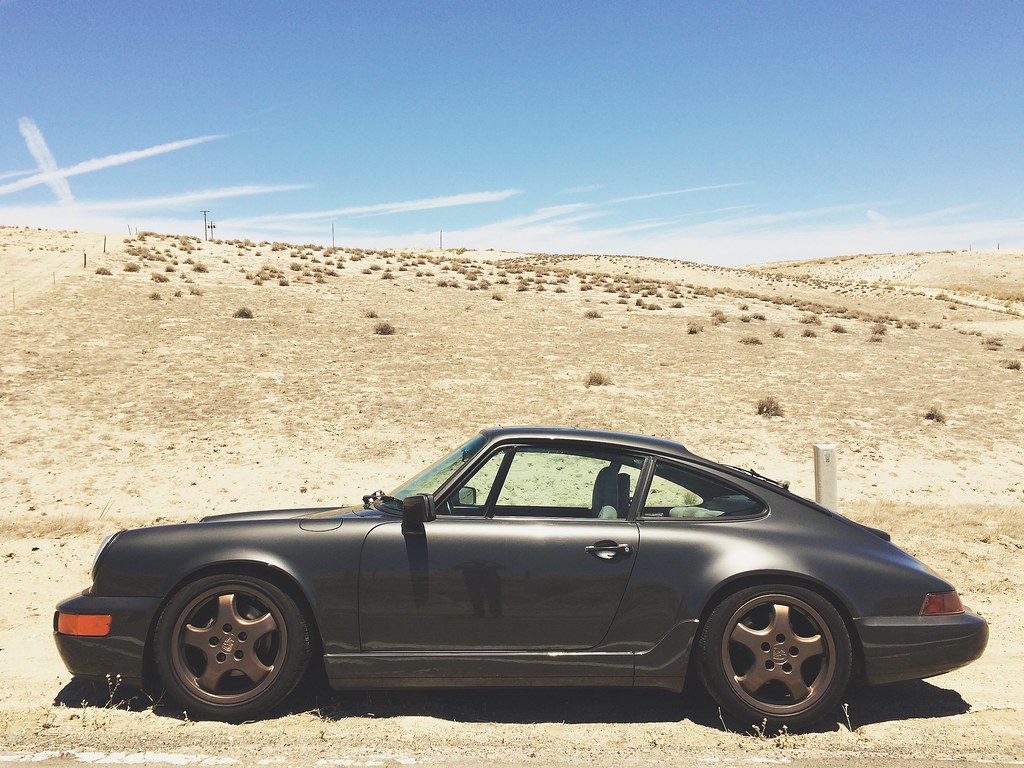
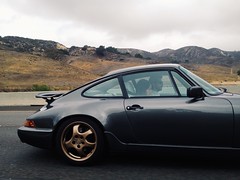
Guest contributor: Michael Ardelean on his 1990 Porsche 911 Carrera 2 (964)

•March 19, 2015 • 8 Comments

My name is Michael Ardelean, and about two years ago I bought the 1990 Porsche 911 that you see here. There were a couple of quirks that influenced my decision:

  • I live a pretty minimalist lifestyle and I don’t have a lot of tolerance for uneccessary stuff, and I stay busy so I value time above all else. So I was looking for something purposeful and also reliable.
  • I have an aversion to disposable things, and I get a little bit sick thinking about how car companies know that their customers only keep their cars for 2-5 years and thus probably build new cars accordingly.

So basically, I wanted something with the narrow body and old school ruggedness, but with semi-modern power and working AC. Old enough to be cool, but nothing too precious.

More »

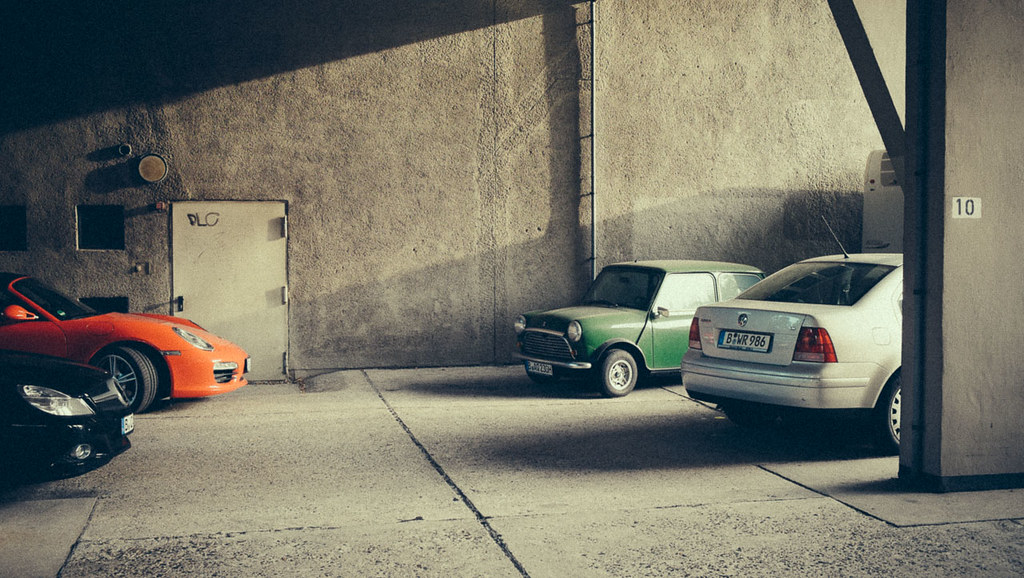
Berlin’s Corbusierhaus has the most amazing light of any parking structure we’ve ever seen

•August 13, 2014 • Comments Off on Berlin’s Corbusierhaus has the most amazing light of any parking structure we’ve ever seen

There’s something about Berlin and its car parks.

Unité d’Habitation of Berlin (German: Corbusierhaus) is an apartment building located in Berlin, Germany, designed by Le Corbusier following his concept of Unité d’Habitation. Le Corbusier’s Unité d’Habitation concept was materialised in four other buildings in France with a similar design (source).

One gets the feeling that if Caravaggio could paint the inside of a parking garage, it would look a bit like the one at Corbusierhaus.

(Images: K_A_Y)

Benton Performance

•June 22, 2014 • Comments Off on Benton Performance

This is one of the more visually striking modern automotive videos we can recall seeing. Kudos to all of the folks involved in its production for pushing the artistic boundaries of what an automotive film can be.

You can see behind-the-scenes stills from the film here, as well as take a look inside Benton Performance’s garage from our own earlier feature here.

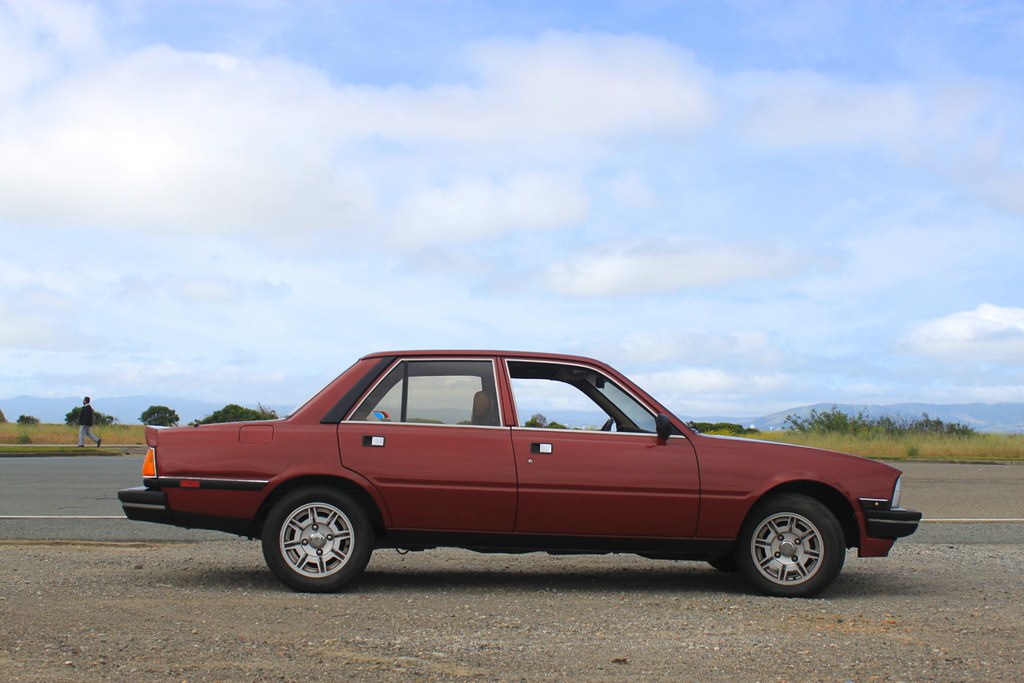
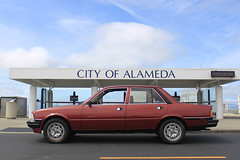
Guest contributor: Sina Pourcyrous on his 1983 Peugeot 505 STI

•May 5, 2014 • 10 Comments

This is the story of my reborn 1983 Peugeot 505 STI.

My dad bought it brand new off the showroom floor in July 1983 in the San Francisco peninsula. It was his daily driver for nearly 20 years. Growing up as a child, my father was my role model, so the car inherently became something that I admired, to the point that it kicked me into a lifelong obsession with cars at a time when most kids were playing with crayons and Play-Doh. My parents still say that “Peugeot” was one of my first words.

More »

Assorted grab bag of stuff we like

•March 10, 2014 • 9 Comments

Getting right to it.

More »

Assorted grab bag of stuff we like

•March 3, 2014 • 10 Comments

Getting right to it.

More »